


Commercial Crushed Ice Maker: What Capacity Does Your Business Need?
Choosing the right ice machine involves more than selecting the type of ice you want to serve. Your business must also have enough production and storage capacity to meet demand, especially during its busiest hours.
A machine that produces too little ice can create operational problems, while an oversized unit may require more space and investment than necessary. Understanding how production, storage, business size, and available space work together can help you choose a commercial crushed ice maker that fits your daily needs.
Start by Understanding Your Business’s Ice Demand
The first step in choosing the right capacity is understanding how much ice your business needs. Ice demand can vary based on the type of business, the number of customers served, and the way ice is used throughout the day.
For example, a busy commercial kitchen may require a larger amount of ice than a smaller café or bar. The demand may also increase significantly during certain hours, making peak periods especially important when selecting equipment.
Consider these questions before choosing a machine:
- When does your business experience its busiest hours?
- How much ice do you expect to use during those periods?
- Will ice demand remain steady throughout the day?
- Do you have enough storage available for additional ice?
Looking at your busiest period instead of only your average demand can help you make a more practical capacity decision.

Understand the Difference Between Production and Storage Capacity
Production capacity and storage capacity are two important factors, but they are not the same. A machine may produce ice at a certain rate while storing a separate amount of ice for later use.
The production rate tells you how much ice the machine can produce under ideal conditions. However, the reference information from Ice Maker Depot explains that actual operating conditions may not always match those ideal conditions.
Storage can also affect how well your business handles busy periods. A larger storage capacity can reduce the pressure on the machine’s production rate by keeping more ice available when demand suddenly increases.
| Capacity Factor | What It Means for Your Business |
|---|---|
| Production rate | The amount of ice the machine can produce. |
| Storage capacity | The amount of ice available for use and demand periods. |
| Peak demand | The period when your business needs the most ice. |
| Available space | The room available for the machine and storage equipment. |
Both production and storage should be considered together when determining the capacity your business needs.
Consider Whether a Modular or Self-Contained Machine Fits Your Needs
Ice Maker Depot identifies two main types of commercial ice makers: modular and self-contained machines. The right choice can directly affect the amount of ice your business can produce and store.
Modular Machines
Modular machines are designed as the ice-making unit itself and require a separate storage unit. They can be suitable for commercial kitchens and other locations that need a larger amount of ice.
Self-Contained Machines
Self-contained units combine the ice maker and storage container into one unit. They are larger than standard consumer machines but smaller than modular equipment.
Match Capacity With the Size of Your Operation
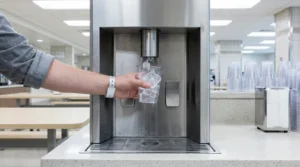
Business size is an important part of choosing the right equipment. Not every commercial location needs a machine with extremely high production capacity.
A smaller bar or café may have different requirements from a larger commercial kitchen. Choosing more capacity than your operation needs may require additional space and increase equipment-related costs.
When evaluating your needs, consider:
- The overall size of your operation
- The amount of ice used during normal service
- Your busiest periods of the day
- The amount of space available for equipment
- The amount of ice you need to keep stored
The goal is to select equipment that can satisfy demand without creating unnecessary space or budget challenges.
Focus on Your Busiest Hours of the Day
Your busiest period is one of the most important factors when choosing capacity. Ice Maker Depot recommends considering when your machine will experience the greatest demand.
During these busy periods, the machine must either produce enough ice or have enough stored ice available to support operations. This is why a business should not make a decision based only on quieter hours.
A higher storage capacity can help manage temporary increases in demand. Instead of relying entirely on continuous production during a busy period, stored ice can help support the operation.
This balance between production and storage can help you determine whether a commercial crushed ice maker has the capacity your business requires.
Remember That Production Rates Are Based on Ideal Conditions
When comparing machines, it is important to remember that manufacturers provide production rates based on ideal conditions. Actual conditions at your business may differ. This means capacity planning should not depend only on the highest production number shown for a machine. Consider how the machine will operate in your specific environment and during periods of high demand.
A careful comparison should include both the stated production rate and the storage capacity available. This gives a more complete picture of how the equipment may support your daily operations. Planning around real business demand can help prevent situations where your ice supply becomes insufficient during busy periods.
Consider Power and Water Requirements Before Choosing a Larger Unit
Capacity is not only about how much ice a machine can produce. Larger commercial equipment may also have specific installation requirements. Ice Maker Depot notes that a commercial crushed ice maker requires more power than a standard outlet. Before choosing a machine, you should check its power requirements and confirm that the proper power source is available near the planned installation location.
Commercial ice machines also need to be connected to a water source. Businesses cannot realistically keep up with commercial water demand through manual filling. The location of available utilities may therefore affect which capacity and machine configuration work best for your space.
Conclusion
The right commercial crushed ice maker should match your business demand, available space, storage needs, and installation requirements. A larger machine may produce more ice, but it may not be the right choice if your operation does not need that capacity or does not have enough room for the equipment.
Start by considering your busiest hours and the amount of ice your business needs during those periods. Then compare production rates with available storage capacity and review your space, power, water, and drainage requirements. By looking at these factors together, you can choose an ice-making solution that supports your operation without selecting more capacity than your business actually needs.