
Hawaii Coverage · Free Quote Comparison
Commercial Ice Machines in Hawaii — Buy, Lease & Rent
Tell us what your Hawaii operation needs — daily ice volume, industry, and where the machine will live. We’ll route your request to commercial ice machine suppliers covering your island so you can compare priced options side-by-side instead of chasing quotes one supplier at a time.
No obligation. No purchase required. Suppliers respond within 24 hours.
|
10+ Years Matching Buyers & Suppliers |
50 States Served Nationwide |
24 hrs Typical Supplier Response Time |
Free No Cost & No Obligation |
Ice Demand Across Hawaii
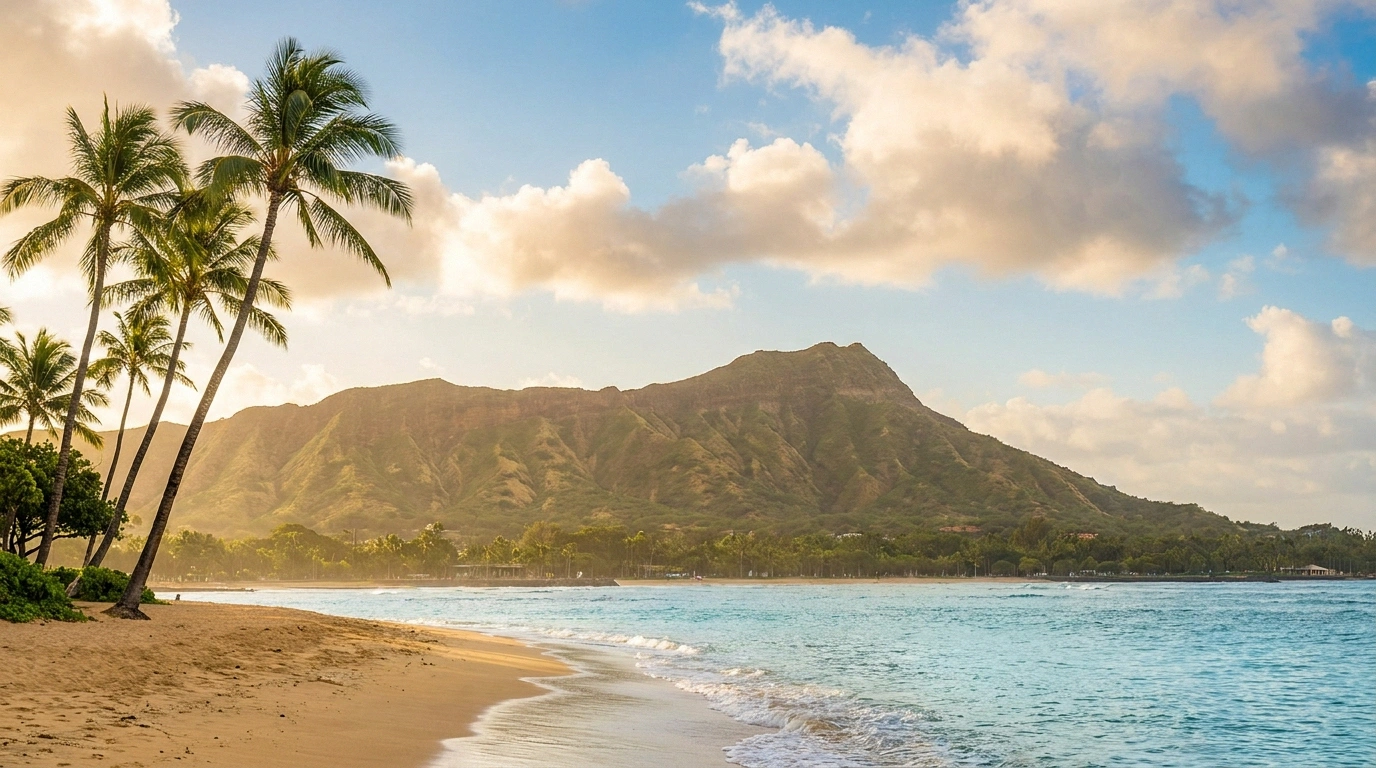
Hawaii’s commercial ice demand is anchored more heavily in tourism and hospitality than almost any other state. Bureau of Labor Statistics data for 2024 reports 563 accommodation establishments employing 39,253 people and 4,560 food services and drinking places employing 65,913 people across the islands — together roughly one in five of Hawaii’s private-sector jobs, an unusually high hospitality concentration driven by the visitor economy. Tourism spending follows that scale: the Hawaii Department of Business, Economic Development and Tourism reported 3.22 billion dollars in 2024 visitor spending on Hawaii Island alone, up 6.4 percent year over year. Waikiki and greater Honolulu carry the heaviest visitor volume, with Maui and Hawaii Island resort corridors close behind, feeding steady cube, nugget, and flake ice demand at hotels, resort kitchens, bars, and poolside service. Healthcare adds a separate buying pattern — Hawaii’s 40 private hospitals employ 16,594 people per the same BLS data, and pellet and nugget ice are the hospital standard because they are softer on teeth and IV access. Seafood and poke culture drives flake-ice demand for fish display, and the military presence around Joint Base Pearl Harbor-Hickam on Oahu sustains institutional foodservice volume year-round.
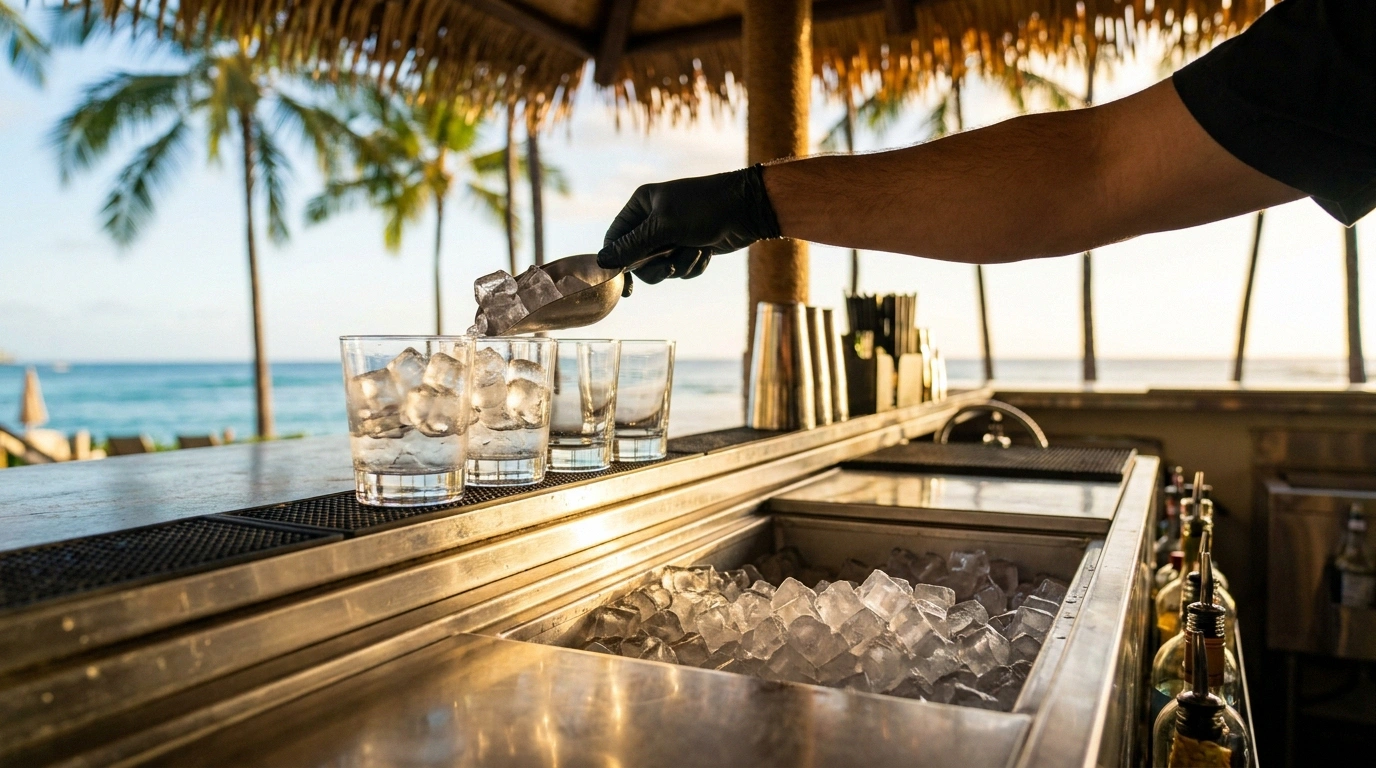
Hawaii’s tropical marine climate places real constraints on commercial ice machine selection. The islands stay warm and very humid almost year-round, with little of the winter cooling-load relief most of the mainland gets — the National Weather Service describes effectively two seasons rather than four. Honolulu averages a high near 87°F in the warmest month, August, and still around 79°F in the coolest month, January, per NOAA 1991-2020 normals, and back-of-house kitchen temperatures run hotter. In that persistent heat and humidity, air-cooled commercial ice machines lose meaningful daily production capacity, particularly in non-conditioned spaces, which often pushes operators toward water-cooled units, remote condenser configurations, or sizing the air-cooled machine up to absorb the load. Coastal salt air is a second factor — it favors stainless construction and corrosion-aware placement. High island real-estate cost and tight urban kitchens, especially in Honolulu and Waikiki, also push many buyers toward compact undercounter footprints.
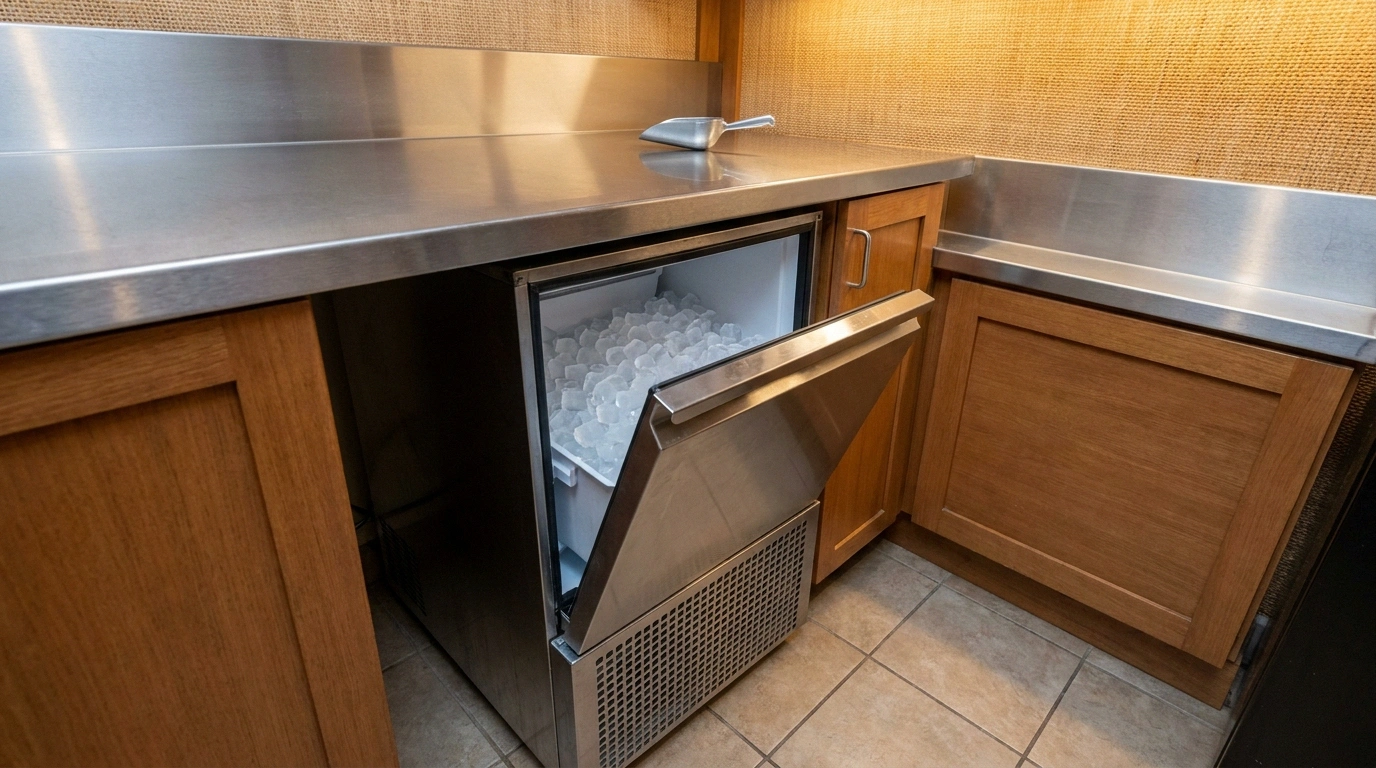
Island logistics set Hawaii apart from any mainland state. Nearly all commercial ice equipment is barged in by ocean freight, then moved by inter-island freight to the neighbor islands, so lead times, freight handling, and local parts availability matter more here than they do where a truck can deliver overnight. Oahu (Honolulu) has the deepest commercial supplier base, while Maui (Kahului and Wailuku), Hawaii Island (Kailua-Kona and Hilo), and Kauai (Lihue) are served by a mix of Oahu-based suppliers shipping inter-island and on-island providers. Because of that distance from mainland depots, dependable local supplier support and service coverage carry real weight in the buying decision. Telling us your island, daily ice volume, and whether the equipment will live in a conditioned interior or a hot back-of-house space helps suppliers spec the right configuration the first time.
Start Your Free Hawaii Quote Comparison
Takes about 60 seconds. Tell us what you need and we’ll handle the supplier outreach.
How the Quote Match Works in Hawaii
|
1. Tell us what you need Daily ice requirement, your industry, buy/lease/rent preference, and where in Hawaii the machine will live. About 60 seconds. |
2. Hawaii suppliers compete Your request goes to commercial ice machine suppliers serving your area. They respond with priced options matched to your need — typically within 24 hours. |
3. You pick the best fit Compare prices, terms, warranty, and delivery side-by-side. Choose the supplier that fits — or walk away. The service is free either way. |
Equipment from leading manufacturers
Hoshizaki · Manitowoc · Scotsman · Ice-O-Matic · Follett · Maxx Ice
Hawaii Metros We Cover
Our supplier network covers commercial ice machine installs across all the Hawaiian islands. Honolulu has its own page on Ice Maker Depot — but our coverage isn’t limited to listed metros. If your location isn’t shown, enter your address in the form above and we’ll route your request to suppliers actively serving that island, including Hilo and Kailua-Kona on Hawaii Island, Kahului and Wailuku on Maui, Lihue on Kauai, and Kapolei, Pearl City, and Waipahu on Oahu.
| Honolulu → |
Common Questions From Hawaii Buyers
Does Hawaii’s humidity and salt air change which type of commercial ice machine I should buy?
It can. Hawaii’s tropical marine climate stays warm and very humid year-round — Honolulu averages a high near 87 degrees in August and still around 79 degrees in January per NOAA 1991-2020 normals, with little of the winter cooling-load relief the mainland gets. Air-cooled commercial ice machines work harder and lose some daily production capacity in persistent heat and humidity, especially in non-conditioned back-of-house spaces. Coastal salt air also favors stainless construction and corrosion-aware placement. Suppliers often recommend a water-cooled unit, a remote condenser, or sizing an air-cooled machine up to absorb the load. Mention whether the machine will live in a conditioned interior or a hot kitchen when you submit the form.
Does the supplier network cover the neighbor islands — Maui, Hawaii Island, and Kauai — or only Oahu?
Both. Oahu (Honolulu) has the deepest supplier base, but the network also covers the neighbor-island markets — Maui (Kahului, Wailuku, the Lahaina corridor), Hawaii Island (Kailua-Kona and Hilo), and Kauai (Lihue). Some suppliers serve all islands from an Oahu hub with inter-island freight; others are based on-island. Because nearly all equipment is barged in, lead times and freight handling matter more than on the mainland. Enter your location in the form and we will route your request to suppliers who actively serve that island.
Air-cooled or water-cooled — which works better for a commercial ice machine in Hawaii?
Air-cooled machines reject heat using ambient air pushed through a condenser, which is simpler to install but sensitive to high ambient temperature, humidity, and tight unventilated spaces. Water-cooled machines reject heat into a water loop instead, which holds production capacity steadier in hot, humid conditions but uses more water. In Hawaii’s warm, humid year-round climate, operators in conditioned spaces often do fine on a well-sized air-cooled unit, while hot back-of-house kitchens and high-volume operations more often benefit from water-cooled or remote-condenser setups. Tight, high-cost island kitchens also push many buyers toward compact undercounter units. Suppliers weigh those tradeoffs with you in the quote.
How does service and repair work in Hawaii given the island logistics?
Local supplier support matters more in Hawaii than almost anywhere else, because parts and replacement equipment are barged in rather than trucked overnight. Ice Maker Depot connects buyers with suppliers for new and used equipment quotes, including lease and rental arrangements where ongoing service is bundled into the monthly payment — a common setup with Hawaii suppliers who include delivery, install, and maintenance. Standalone repair of a machine you already own is not part of the quote-comparison service, but several suppliers in the network sell equipment under service contracts that cover preventive maintenance, cleaning, and repair. Note that in the form if you want suppliers who can wrap service into the deal.
Should you buy, lease, or rent a commercial ice machine?
It depends on how hard you run the machine and how you want to handle the cost. Buying tends to have the lowest long-run cost when a unit runs year-round and you can cover its own maintenance. Leasing spreads the cost into predictable monthly payments and often bundles service, repairs, and cleaning into the agreement — a common choice for restaurants and bars that want to preserve capital. Renting fits short-term, seasonal, or trial needs. Operating cost matters too: energy use, water use, and upkeep vary by machine type and by whether the unit is air-cooled or water-cooled. Tell us whether you want to buy, lease, or rent on the form and suppliers in Hawaii will quote the options that fit, so you can compare side by side before deciding.
Is the quote service really free?
Yes. There is no charge to compare quotes through Ice Maker Depot. Suppliers pay us when they connect with new buyers — you never pay for the service or for the quotes themselves.
What if you are not sure what size machine you need?
Suppliers will help size the machine to your daily ice demand and the available space. If you are early in the process, our commercial ice maker buyer’s guide covers daily ice output by industry, undercounter vs modular tradeoffs, and water-cooled vs air-cooled selection — read it before you submit if you want a head start.
Ready to compare commercial ice machine quotes in Hawaii?
Free service. No obligation. Typical response within 24 hours.