
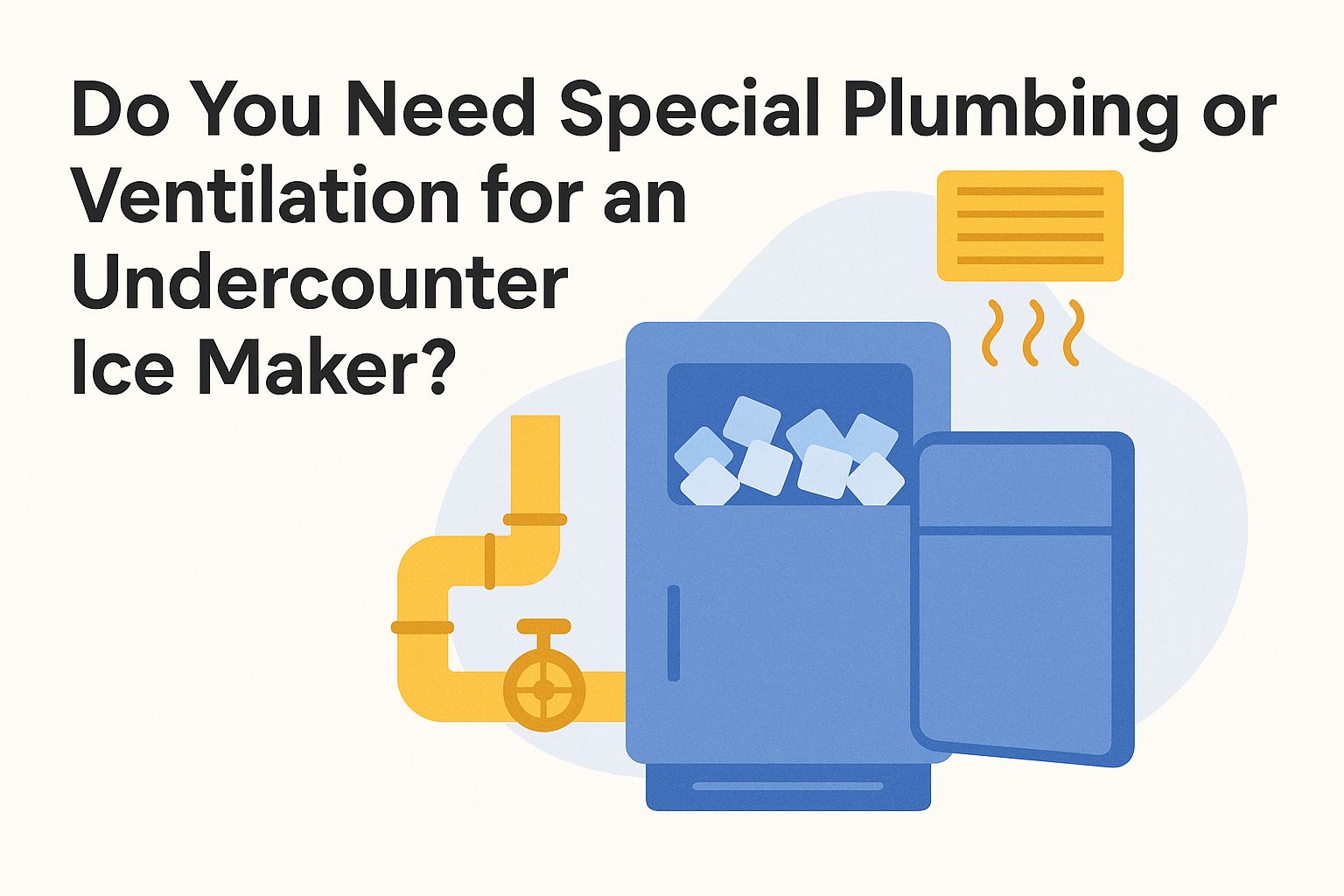
Do You Need Special Plumbing or Ventilation for an Undercounter Ice Maker?
Imagine reaching for a refreshing drink, only to find your undercounter ice maker is out of commission. You might be wondering if you’ve missed something important during the ice maker setup. Special plumbing requirements and ventilation needs could be the key to keeping your undercounter ice maker running smoothly. This guide shows you how to set up water and manage airflow to avoid problems and keep a constant supply of ice. Ready to dive in?
Definition and Purpose
An undercounter ice maker is a specialized compact refrigeration unit that produces and stores ice, designed for installation beneath countertops, ensuring space-saving functionality.
These compact appliances are especially beneficial for home bars, restaurants, or anyone who frequently entertains.
For instance, a model like the EdgeStar IB120SS can produce up to 28 pounds of bullet ice daily, perfect for keeping drinks cool during gatherings, thanks to its efficient ice production capacity.
Ice maker installation typically requires a simple water supply line connection, and many undercounter ice makers, like the Scotsman CU50GA-1A, come with built-in insulation to maintain ice quality.
People like having a specific spot for ice that doesn’t take up important kitchen space.
Benefits of Undercounter Design and Ice Makers
One key benefit of undercounter ice makers is their energy efficiency and ability to produce up to 28 pounds of ice daily, streamlining ice availability for homes and businesses alike.
Many models feature energy-efficient designs that can save on electricity costs, often boasting Energy Star ratings. For example, the EdgeStar IB450SS produces a high volume of clear ice while using minimal energy.
Putting it in is easy, as it usually fits well into the existing cabinets, effectively using the available space. Consider features like alerts for low water levels or ice overflow to keep everything running properly.
These features make undercounter ice makers practical and a good investment for anyone who loves ice.
Understanding Plumbing Requirements

Proper installation of undercounter ice makers needs knowledge of the plumbing needs to make sure there is a steady water supply and effective drainage, which are important for the best performance.
Water Supply Connection
Connecting a water supply line to your ice maker typically involves using a 1/4-inch copper or plastic tubing for reliable water flow.
Begin by measuring the distance from your water source to the ice maker, ensuring you cut enough tubing. Use a tube cutter for a clean edge, and attach a compression fitting to secure the connection.
For the water supply, you may need a shut-off valve-preferably a saddle valve. Avoid common mistakes such as kinking the tubing or over-tightening the fittings, which can lead to leaks.
Test the setup by turning on the water supply slowly and ensuring no leaks occur before finalizing the installation.
Drainage Needs
A proper drainage system and condensation management are essential for preventing excess water buildup, which can lead to leaks and appliance failure over time.
To make sure water drains properly, start by looking at how your property is set up. If possible, use a gravity drain system to move water away from appliances.
For basements or areas below the main drainage line, use a sump pump. This pump actively gets rid of water to stop flooding. When routing, maintain a slope of at least 1% to facilitate proper flow, adhering to local regulations and plumbing codes.
Put cleanouts every 50 feet to reduce clogs, and install filters to catch debris. Regular upkeep, such as inspecting for obstructions, is important for lasting effectiveness.
Water Filtration Systems
Incorporating a water filtration system can improve the quality of ice produced by undercounter ice makers, enhancing taste and clarity.
For excellent results, try using top-notch filters like the Everpure MC2. It costs around $80 and effectively removes chlorine and sediment.
Another solid option is the Omnipure K2533, providing similar filtration at roughly the same price point.
It’s prudent to check compatibility with your specific ice maker model, as various units may require different sizes or types of filters.
Replacing these filters frequently, typically every 6-12 months, helps your equipment run smoothly and remain durable.
Ventilation Considerations and Venting Systems

Good airflow is essential for undercounter ice makers to work well, avoid overheating, and last longer.
Importance of Proper Ventilation
Insufficient ventilation can lead to overheating, affecting temperature control, which may cause the ice maker to malfunction or result in a shorter lifespan.
To prevent these problems, make sure there is at least 3 inches of space around the unit for good air circulation. Regularly clean the vents to prevent dust buildup, as even small obstructions can impact performance and noise levels.
Monitor the temperature around the ice maker; it should ideally stay between 50 degreesF and 90 degreesF. If you notice the unit is consistently running hot, consider relocating it to a cooler spot or adding a fan to improve airflow. These actions can greatly improve how well the unit works and how long it lasts.
Types of Ventilation Systems
There are various ventilation systems available, including passive ventilation using vents and active systems like exhaust fans, each with its own benefits.
Passive ventilation involves simple vents that allow cooler air to flow in naturally, which is cost-effective and energy-efficient. It may not be sufficient for larger ice makers in tight spaces.
In contrast, active systems like exhaust fans provide better air circulation and temperature control, but they require more installation effort and electricity.
For installation, make sure passive vents are clear and in good spots. For active systems, put fans on exterior walls for the best airflow, and check the manuals for electrical details.
Installation Location and Airflow
Picking the right place to install the unit is important for good airflow. This helps make ice well and stops the unit from getting too hot.
To help airflow, keep your ice maker at least three inches from the walls so it has good ventilation. Consider cabinets made from heat-resistant materials to minimize heat retention.
Make sure there is at least 12 inches of space above the unit to keep it cooling well. To improve airflow and avoid overheating, put your ice maker near a big window or in a room with air conditioning.
This strategic positioning can significantly improve the ice maker’s performance and prolong its lifespan.
Installation Guidelines
Putting in an undercounter ice maker might look complicated, but with the right installation guidelines, including appliance compatibility and manufacturer specifications, you can do it quickly and well.
Choosing the Right Location
Selecting the right location for your ice maker involves considering the available installation space, accessibility to water, and proximity to power outlets.
To get the best performance, measure the installation area carefully, leaving a few inches of space on all sides for ventilation. Check that the location is close to a cold water line, as many models require direct plumbing connections.
Make sure your countertop is strong enough to hold the model, particularly when it is full of ice. Also, consider placing it near frequently used areas for convenience, like kitchens or entertainment spaces, to maximize efficiency and ease of use.
Required Tools and Materials
To install an undercounter ice maker, you’ll need specific plumbing tools like a wrench, drill, and level, along with materials such as tubing and fittings.
Begin by gathering the following materials:
- 1/4-inch copper or plastic tubing (approximately $15)
- A water supply connector kit ($10-$25)
- A drainage line (about $10)
Secure a suitable power outlet for your unit, ensuring it’s within reach.
When you’re ready to install, start by connecting the water line to your ice maker’s inlet valve using the wrench. Use the drill to secure the unit in place before checking for level alignment.
This setup typically costs between $75-$100, depending on specific choices.
Step-by-Step Installation Process
- Prepare the installation site,
- Connect the water supply,
- Establish drainage,
- Plug in the unit, and
- Test functionality.
To make the installation easy, first clear the spot where the unit will go, ensuring there’s enough room for air to flow.
For connecting the water supply, use a wrench to tightly secure the hose to prevent leaks.
When establishing drainage, position a drainage hose directed away from any structures. After plugging in the unit, double-check the power source and settings.
Run a test cycle to verify that water flows correctly and make any necessary adjustments before finalizing the setup.
Common Issues and Solutions with Undercounter Specifications

Knowing about typical problems with undercounter ice makers can help you fix them easily and keep them working well. For an extensive analysis of maintenance practices, our comprehensive study of commercial ice maker upkeep can provide valuable insights.
Water Supply Problems
Issues with household water pressure and water supply can arise from kinks in the tubing, leaks, or a faulty valve, leading to inadequate ice production.
- To troubleshoot these problems, start by inspecting the tubing for any noticeable bends or twists. If you find kinks, gently straighten the tubing to restore proper flow.
- Next, examine the various connections for leaks and, if necessary, tighten loose fittings or replace worn seals. Check the valve function; if it’s stuck or malfunctioning, consider replacing it.
- Inspect your system every few months to prevent issues later on. Consider using devices that monitor water flow to identify any problems quickly.
Ventilation Failures and Noise Reduction
Ventilation failures often manifest as excessive noise, affecting appliance efficiency, or overheating, which can compromise the function and lifespan of the ice maker.
Common causes of these issues include blocked vents, dirty filters, incorrect room temperature settings, and inadequate moisture control.
To solve these problems, check and clean the air intake filters often, and make sure nothing is blocking the ventilation grilles. Keep the temperature steady, preferably between 60-80 degreesF, for best results, ensuring frost-free operation.
Performing maintenance on your ice maker every few months can lower the likelihood of issues and improve its performance, helping it to last longer.
Maintenance Tips for Kitchen Appliances
Regular appliance maintenance, like cleaning inside and checking for clogs, is important to keep your ice maker working well and maintain appliance efficiency.
To keep your ice maker in good condition, follow this maintenance schedule and do these tasks every two months:
- Unplug and empty the ice bin to prevent melting and refreezing.
- Clean the interior using a mixture of warm water and vinegar for sanitization.
- Check the water line for kinks or blockages, ensuring steady water flow.
- Inspect the filter and replace it if it appears dirty or clogged.
Using tools like a soft brush for cleaning and a TDS meter to check water quality can improve how well the appliance works and make it last longer, enhancing appliance efficiency.
Summary of Key Points and Ice Maker Features
Key points to remember include the importance of proper plumbing, ventilation, and regular maintenance for optimal ice maker performance and appliance dimensions fit.
Regularly inspect the water line for any blockages and make sure the ice maker is balanced. It’s important to have good airflow and venting options considered. Leave at least 3 inches of space around the unit for optimal unit placement.
For maintenance, clean the ice maker monthly with a mixture of vinegar and water to prevent mineral buildup. If you notice strange noises or irregular ice production, consult your user manual for troubleshooting tips.
By using these methods, you can extend the life of your ice maker, increase its dependability, and improve its performance, making your kitchen run more smoothly.
Final Recommendations for DIY Installation
Before you install, reach out to a plumbing expert to make sure everything aligns with the plumbing warranty, and confirm that electrical connections meet safety standards.
If you decide to continue on your own, take these important steps for DIY installation:
- First, turn off the main water and electrical supply to prevent accidents, acknowledging power requirements.
- Next, carefully read the installation manual for your appliance. These instructions usually have diagrams that are important for knowing the appliance size and features.
- Use tools like a multimeter to test electrical circuits and a level to check that everything is straight, making sure that everything works correctly and looks good.
- Before finishing, test connections and inspect for leaks, assessing drainage installation accuracy.
Always prioritize safety by wearing appropriate personal protective equipment, such as gloves and goggles, during the process, adhering to food safety standards.
FAQs on Ice Maker Brands and Features
Answering common questions can clear up typical issues about undercounter ice makers, including ice thickness adjustment and countertop compatibility. Curious about how different types of commercial ice makers affect these factors? Our comparison of the top 3 types of commercial ice machines for restaurant owners provides valuable insights.
Do all undercounter ice makers require plumbing or professional plumbing services?
Most undercounter ice makers require plumbing connections for water supply, but some models can operate with a manual fill method, offering undercounter modifications for space optimization.
When choosing between a plumbed or manual ice maker, consider your setup, plumbing accessories needed, and how often you’ll use it.
Plumbed models, like the Scotsman CU50GA-1A, connect directly to your water supply, providing a steady flow of ice without frequent refills. Instead, manual models like the Igloo ICEB26HN can be filled when needed, making them ideal for small spaces or occasional use, adjusting to seasonal needs.
Assess factors like your kitchen design, kitchen functionality, usage frequency, and installation ease to determine the best option for your needs, factoring in installation cost.
Can I install an undercounter ice maker without ventilation or considering venting options?
Installing an undercounter ice maker without proper ventilation can lead to overheating and potential failure of the unit, impacting ice maker reliability and appliance efficiency.
To get the best airflow, leave at least 1 to 2 inches of space on all sides of the ice maker. This allows heat dissipation and minimizes the risk of breakdown, contributing to noise insulation and space optimization.
Think about using a small fan to improve air movement in tight areas. If your design permits, invest in a vented model specifically designed for undercounter installations. Regularly check the exhaust area for blockages and clean it to maintain efficiency, ensuring compliance with warranty information and customer reviews.
Neglecting ventilation can harm the unit and create safety risks in your kitchen, compromising customer service standards and user experience.

About the Author
I’m James Calloway, a Purdue University graduate with a bachelor’s in Mechanical Engineering and the owner of a successful commercial refrigeration and ice machine supply company in Florida. For the past 15 years, I’ve helped businesses across the Southeast select, clean, and replace their commercial ice machines with confidence. As a contributor to Ice Maker Depot, I specialize in helping operators make smart, efficient equipment choices that boost performance and profits.